


Bending Branch Restoration
Ecological Restoration for Working Lands and Waterways
Bending Branch Restoration provides riparian buffer plantings, wildlife habitat restoration, and silvopasture implementation designed to strengthen land, protect water, and support long-term stewardship. We work with landowners and conservation partners to restore natural systems that are practical, resilient, and built to last.
What We Do
Riparian Buffer Restoration
Native streamside plantings that stabilize banks, improve water quality, and reconnect habitat.
Wildlife Conservation
Habitat restoration designed to support native species and increase biodiversity across the landscape.
Silvopasture Implementation
Integrating trees, forage, and livestock to create productive, resilient working lands.
Project Design & Maintenance
Site-specific planning, installation, and long-term care to ensure successful restoration.

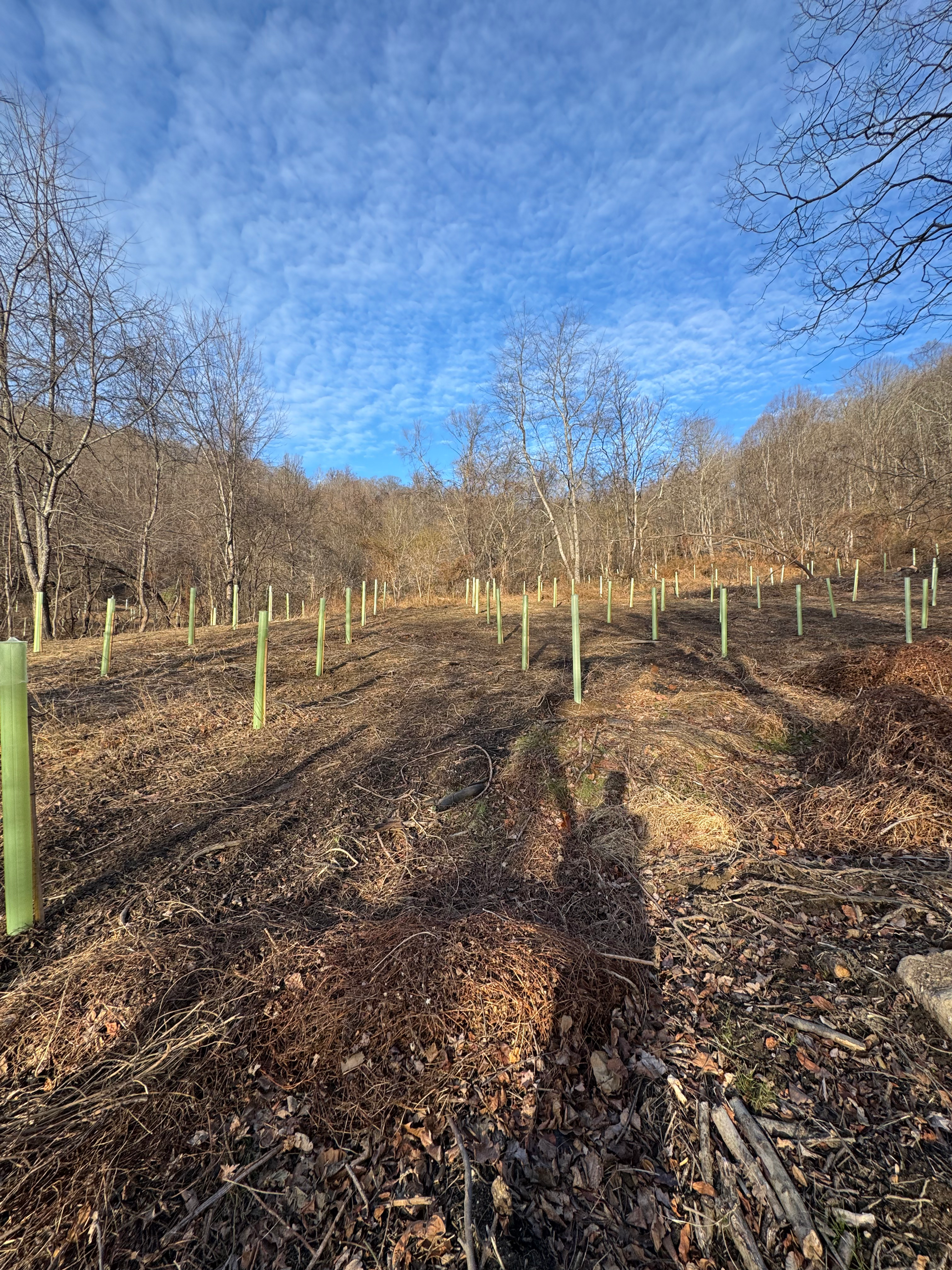
We converted this unused pasture into sustainable forestland through carefully planned reforestation. By establishing native tree species, the site is now on track for improved soil health, enhanced wildlife habitat, and significantly lower long-term upkeep.

Returning a forest to health sometimes means starting fresh. After removing invasive vegetation, we replanted this area with native species selected to support wildlife and strengthen the overall ecosystem. The renewed stand is now on track to develop into a thriving, balanced forest.

While many restoration projects focus on streams and rivers, this effort addressed shoreline erosion along Lake Anna. We installed a variety of native riparian species to stabilize severely eroding banks, helping protect the property while improving ecological function along the waterfront.

Urban tree planting enhances visual appeal while providing valuable environmental benefits. Trees offer shade, cover, and forage for wildlife species, and they also help reduce the impact of sunlight on roads and buildings. By moderating surface temperatures and limiting heat absorption, urban trees contribute to more comfortable and resilient developed spaces.

Successful riparian buffer establishment depends on several key factors, including quality planting material, thorough site preparation, and careful installation of each species to ensure strong establishment. In some cases, additional supervision and attention to detail help keep the project on track and promote long-term success(Sully is the best in the business)

When properly maintained, buffers can quickly explode with life. Just a few years after installation, this site now features thriving native trees and dense vegetation that are actively stabilizing the area and improving ecological health.
Services
 $250 Per Acre
 Based on Project
 Based on Project
 Based on Project
 Based on Project
 Based on Project
Our Commitment
At Bending Branch Restoration, our commitment is to the long-term health of land, water, and wildlife. We believe meaningful restoration work happens when ecological knowledge, careful design, and ongoing stewardship come together. Every project we undertake is guided by respect for natural systems and a responsibility to leave landscapes stronger, more resilient, and more functional than we found them.
We do not believe in one-size-fits-all solutions. Each site has its own history, challenges, and potential. Our role is to listen—to the land and to the people who steward it—and design restoration strategies that work with natural processes rather than against them.
Our Vision
At Bending Branch Restoration, we envision landscapes where healthy waterways, thriving wildlife, and productive working lands exist in balance.
We see riparian corridors once again functioning as living systems—streams shaded by diverse native vegetation, banks held together by deep-rooted plants, and floodplains able to absorb and slow high water rather than resist it. These restored buffers protect water quality, support aquatic life, and reconnect fragmented habitats across the landscape.
We envision farms and managed lands where conservation and productivity are not competing goals. Through silvopasture and integrated land management, we see working landscapes that build soil, support livestock, sequester carbon, and remain economically viable for the people who depend on them.
We believe restoration should strengthen both ecosystems and communities. Our vision is for landowners to feel empowered and supported as stewards of their land, with restoration practices that are practical, durable, and tailored to real-world conditions.
Looking forward, we see a future where:
-
Riparian buffers are the standard, not the exception
-
Wildlife habitat is woven back into agricultural and rural landscapes
-
Restoration projects are designed for decades, not seasons
-
Land management decisions are guided by ecological understanding and long-term care
Our vision is not just to complete projects, but to help shift how land is cared for—toward systems that are resilient, adaptive, and alive.
At Bending Branch Restoration, we are committed to doing the careful, patient work required to turn that vision into reality, one site and one watershed at a time.
Our Values
Stewardship
We approach every project as long-term caretakers, not short-term installers. Stewardship means making decisions that prioritize soil health, water quality, and ecological resilience well beyond the life of a single project. We take responsibility for the outcomes of our work and remain invested in its success over time.
Ecological Integrity
Healthy ecosystems are diverse, interconnected, and self-sustaining. We prioritize native, site-appropriate species and restoration methods that strengthen natural processes. Our work is guided by science, field experience, and an understanding of how ecosystems function as a whole.
Resilience
Landscapes must be able to adapt to change—floods, droughts, climate variability, and evolving land use. We design projects with resilience in mind, focusing on systems that can recover, persist, and thrive under real-world conditions.
Partnership
Successful restoration depends on collaboration. We value strong relationships with landowners, farmers, conservation organizations, and agency partners. We see each project as a shared effort built on trust, communication, and mutual respect.
Practical Conservation
We believe conservation and land use can work together. Our solutions balance ecological goals with real operational needs, ensuring that restored landscapes remain productive, manageable, and economically viable.
